


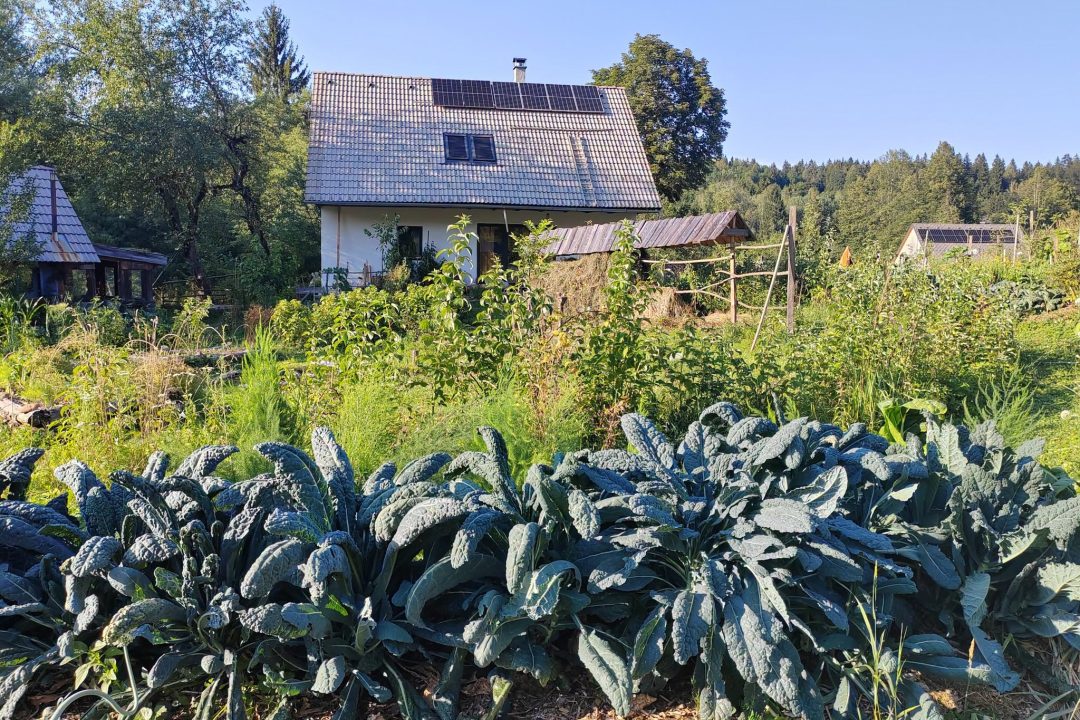
Mokri Potok (German: Unterwetzenbach), a small village near Kočevska Reka (German: Rieg), was once one of many Gottscheer villages that suffered a tragic fate before, during and after the Second World War. After virtually all its permanent residents had resettled, the settlement remained completely deserted for decades, including during the period after the Second World War when it formed part of the so-called closed-off area.<br/>After years of dormancy, a group of enthusiasts passionate about living in and alongside nature decided to establish the Mokri Potok Cooperative in 2013, bringing the village back to life. Its members purchased land and built four houses of different sizes using entirely natural materials. Today, these houses form Slovenia’s first and, to date, only ecovillage.
From a Thriving Pre-war Village to a Ruined Post-war Settlement
The website of the Mokri Potok Ecovillage states:<br/>“Once an old Gottscheer village deep in the forests of Kočevje, Mokri Potok has roots reaching far back into the past. The first written records date to 1498, when several houses and a small church stood in the area. The village was part of the dispersed Gottscheer culture and community, whose members lived in relative isolation for centuries, in close harmony with the forests. However, the history of villages in this area was marked by dramatic upheavals. After the Second World War, the Gottscheers left, the houses stood empty, the paths became overgrown, and Mokri Potok gradually disappeared from everyday life. By 1965, the village had been completely abandoned, with no permanent residents and no clear future.”
As Andreja Mihelič notes in the recently published book Kočevsko za radovedneže in ljubitelje(Kočevje for the Curious and Enthusiasts), in the nineteenth century the settlement of Mokri Potok had at least one mill, an inn, a small church and a chapel. In 1936, the village had 26 inhabited houses. Following the departure of the Gottscheer Germans in 1941, only four houses remained inhabited. Although eight houses were occupied in 1945, all residents had left the village by 1965. After the last inhabitants departed, most of the houses were demolished, most likely to accommodate the activities conducted in the restricted area.
“Recently, we were visited by a woman from Austria who told us that she had been born in Mokri Potok in 1951. This means that at least one family of German origin remained here after the war. By 1965, the village had been almost entirely demolished and remained uninhabited until 2013, when we decided to purchase the land and build houses,” Marko Kovač, the initiator and driving force behind the ecovillage, told me in an interview.
Revived as a Unique Ecovillage
“Five founding members came together to establish the ecovillage and formed a cooperative. The idea came from the internet, more specifically from YouTube. Projects of this kind are already relatively widespread abroad, particularly in Germany, Spain and Italy. Many of them fail, so we are proud that ours has been operating successfully for more than a decade. The settlement consists of four houses of different sizes, all built entirely using natural building techniques. Essentially, it combines environmentally friendly construction, a natural way of life and a strong sense of community, as well as the pursuit of a better, fairer and more sustainable world in which we all live in harmony.”
“Tone Puglej, the director of a company specialising in natural building, had nurtured this ambition for years, and I had been entertaining a similar idea for quite some time. Tone initially planned to develop a village in the Primorska region, but eventually the decision fell on Kočevje, where more than ten abandoned villages with land designated for construction were available. After consulting the mayor of Kočevje at the time, we settled on Mokri Potok, although we had also discussed Hrib pri Koprivniku. Since there was not as much agricultural land available there, this location ultimately proved the better choice,” Marko Kovač added.
In Constant Contact with Nature, Others and Ourselves
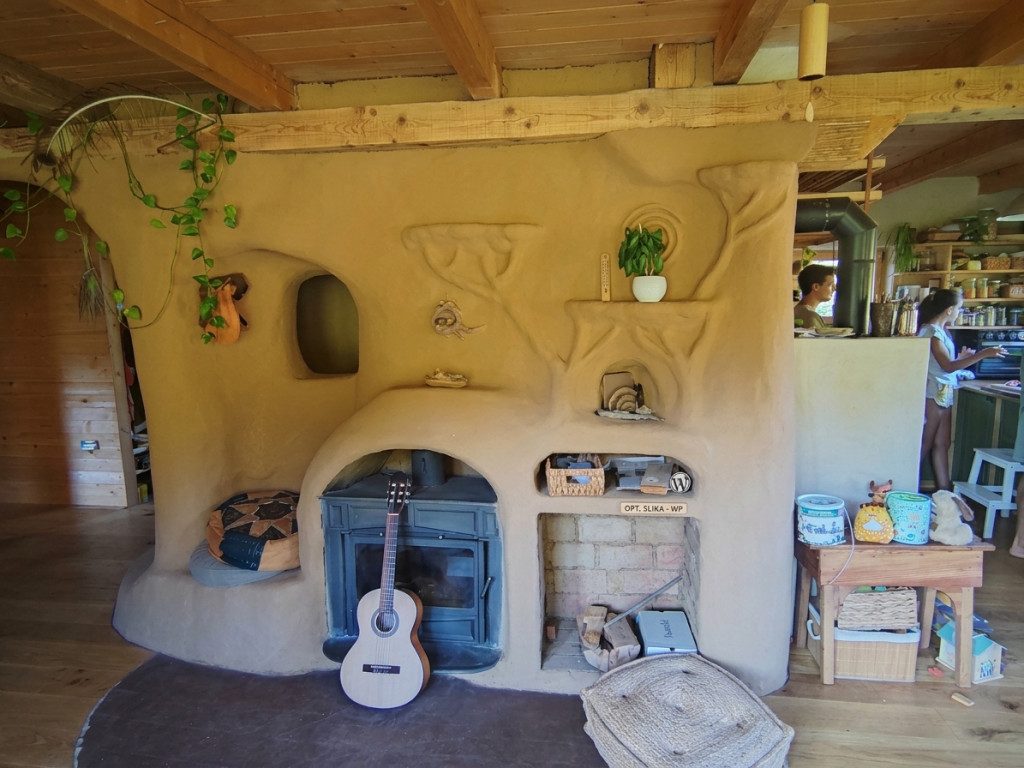
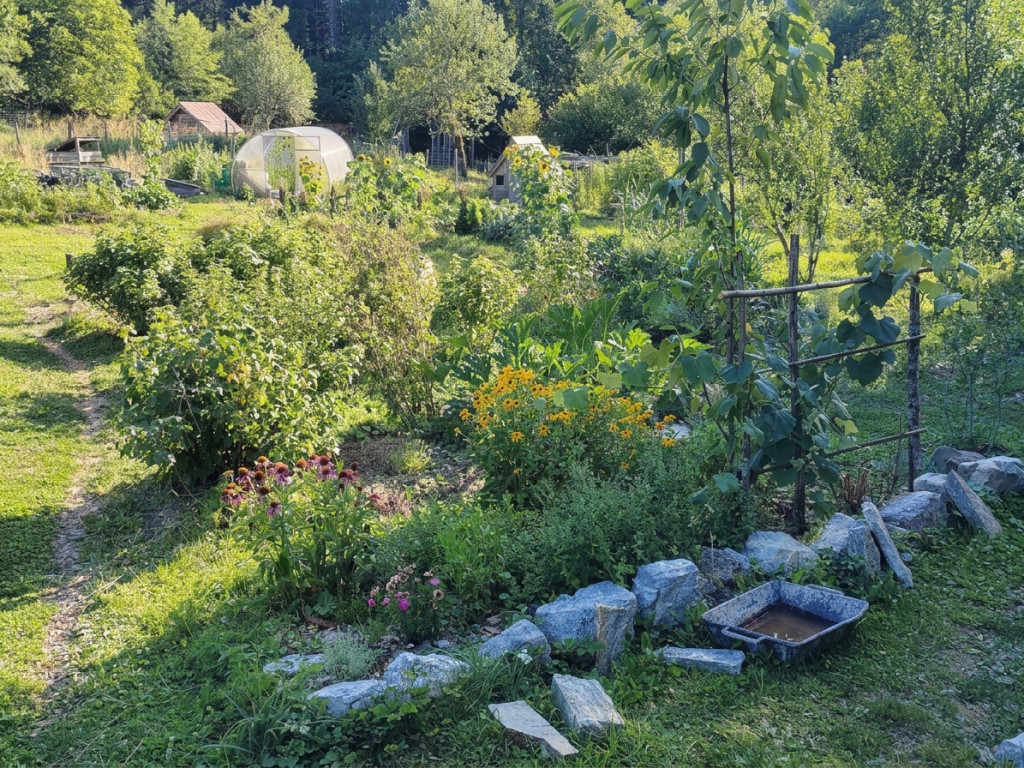
“Everything is based on natural materials. The houses have timber and clay structures, while the insulation is made from materials such as hemp and straw. We live in daily coexistence with nature, maintaining close connections with other people and ourselves. We are not about what you might call a ‘beer and ćevapčiči culture’. We host social gatherings, workshops and small festivals for up to 50 visitors. These events differ from conventional ones because we avoid alcohol.The village operates off-grid, meaning it is not connected to the public water supply or electricity grid. Instead, we use solar energy and collect rainwater. We only use the electric oven until sunset. This way of life has considerable advantages, as technology is advancing rapidly and solar panels and batteries, which we also use, are becoming increasingly affordable. With a few adjustments, we can achieve energy self-sufficiency without difficulty. We heat our homes with firewood and collect drinking water from a spring. We are also largely self-sufficient in food, as our gardens produce enough for our needs. We also keep some livestock.”
“It is a misconception that we are a closed community. On the contrary, we want our ideas to spread and perhaps inspire others. We regularly welcome visitors from abroad who are already familiar with similar projects and come to see our ecovillage as an example of good practice. Our community is closely connected, but we are certainly not a ‘commune’. We meet regularly and make decisions together about everything that happens in the village, while each family still has its own private space. We help one another with various tasks, particularly in the gardens, around the houses and with the livestock. We share meals once a week, and even more frequently in summer, when guests and volunteers join us to help organise events.”
Known Abroad, but Not in the Local Community
“The village has around 15 residents, including six children, and a dedicated event space. We are also nearing completion of a larger car park. We use local materials for construction and other work, particularly timber and clay, which are readily available in our surroundings. Some residents are more closely connected to nature than others, but we all share similar values. For example, a Swiss couple who moved here recently have chosen to live entirely without electricity, whereas I need a Wi-Fi connection to work on my computer. The ecovillage is not a tourist village. Of course, we welcome everyone, especially those attending our events, but Mokri Potok is primarily a place where permanent residents live. Anyone wishing to move here must complete a questionnaire on our website, as it is important that prospective residents share our values. We have a six-month trial period before accepting new ‘neighbours’. Certain requirements must be met to live in the ecovillage.”
“We receive many visitors from abroad, from Ljubljana and from other Slovenian cities, but very few from the Kočevje area itself. The only regular visitor from the local area is one of Kočevje’s musicians. People from Ljubljana visit us frequently, including some who have never travelled south of the capital before. Recently, for example, we organised an open day for the local community, but the response was virtually nonexistent. It is a fascinating phenomenon that we are recognised abroad but remain relatively unknown in our own local community. We maintain close ties with local farmers and work with them regularly. We have good relationships with individuals, but awareness of our ecovillage remains limited in the wider community. That is why we organise a variety of events aimed at attracting a broader range of visitors. These include a gardening workshop and a digital detox workshop, which offers a four-day retreat in nature without digital devices or internet access,” our interviewee concludes.
Sources:
- Interview with Marko Kovač, representative of the Mokri Potok Cooperative and resident of the Mokri Potok Ecovillage, conducted on 29 July 2026.
- Mihelič, Andreja v Mršek Bajda, Lela Angela (ur.). 2026. Kočevsko za radovedneže in ljubitelje. Znanstvenoraziskovalni center SAZU. Ljubljana.
- Mokri Potok Ecovillage website, available here.
Learn more about the archaeological site Viliklein our previous post.
This post is also available in:


No Comments Found